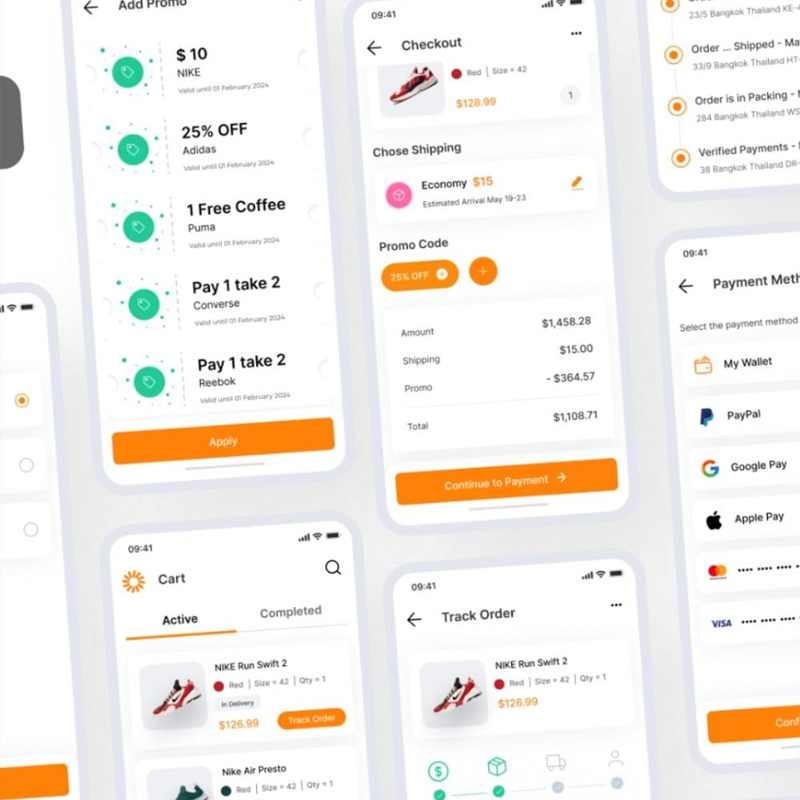
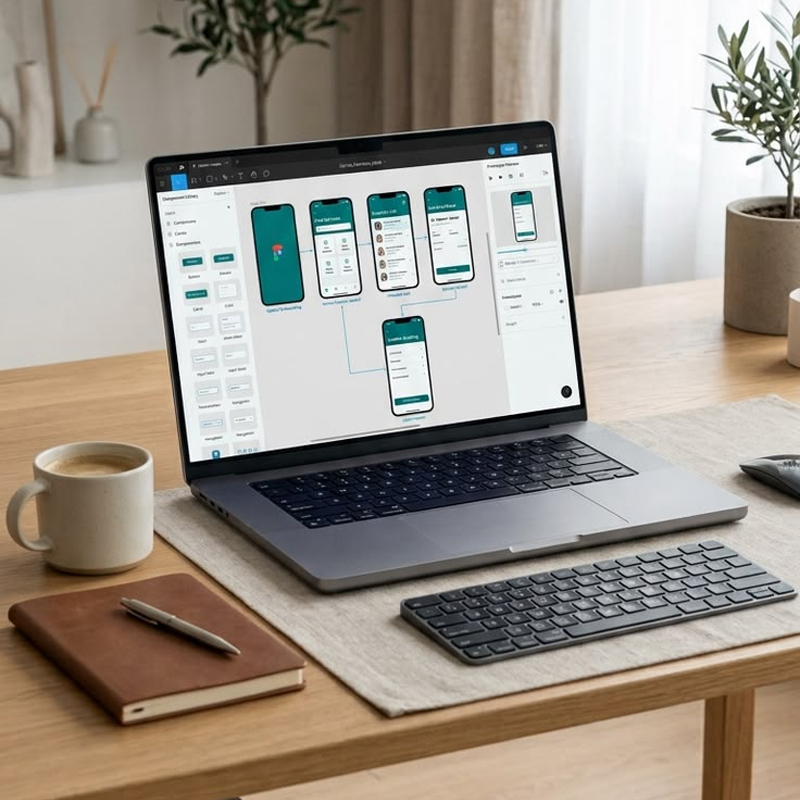
1. Visualizes the App Structure See how screens, features, and navigation will connect before development starts.
2. Identifies Usability Issues Early Prototyping makes it easier to spot confusing flows and unnecessary steps before they become development problems.
3. Clarifies Project Requirements A prototype provides a clearer reference for understanding features, interactions, and user journeys.
4. Reduces Development Uncertainty Reviewing the planned experience early can help minimize costly changes during the development stage.
PROTOTYPE-FOLIO
A detailed app prototype gives businesses a practical preview of how their application will function before development begins. Businesses that use prototyping benefit from clearer project direction, earlier usability insights, better communication between stakeholders, and fewer surprises during development and your application can gain the same advantages through a carefully structured prototype.
We begin by understanding the application’s objectives, features, and target users. User journeys and screen structures are then mapped, followed by interactive prototype development that demonstrates navigation and key interactions before the application moves into full development.
App prototyping is the process of creating an interactive representation of a mobile application’s screens, navigation, user flows, and key interactions before the actual development begins.
2. Why should I create a prototype before developing my app?
3. Can an app prototype be interactive?
Yes. Interactive prototypes can demonstrate screen transitions, navigation, buttons, menus, forms, user flows, and other key interactions to provide a realistic preview of the planned application.
4. Can the prototype be changed before development?
Yes. One of the main advantages of prototyping is the ability to review and refine the application’s structure and user experience before development, making changes easier and more efficient at an early stage.